

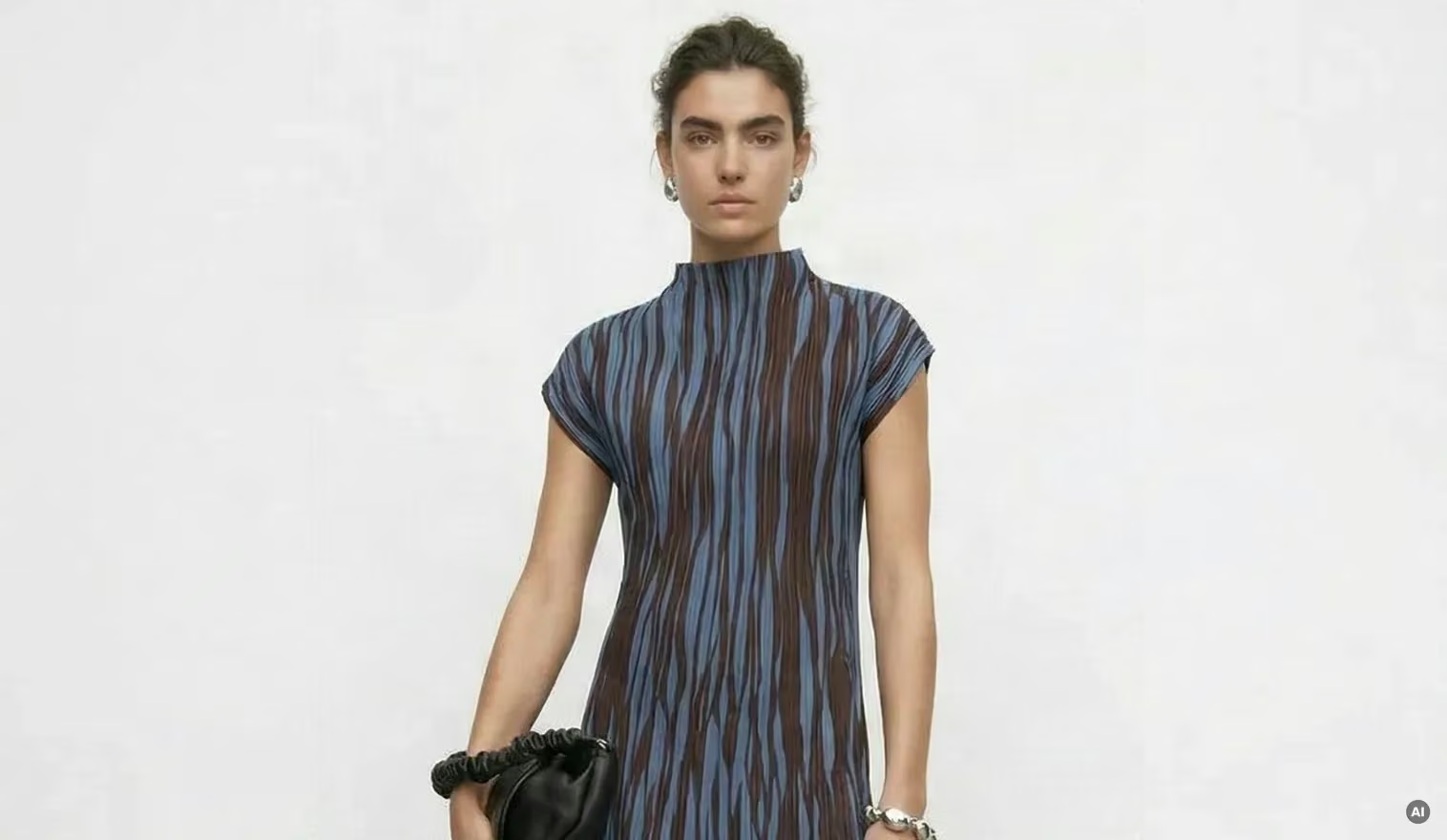
Fashion weeks set the creative direction for an entire season. But for ecommerce managers and marketing teams, the real challenge isn't spotting trends, it's turning them into product content fast enough to matter. The brands winning at runway to ecommerce today aren't the ones with the biggest photo budgets. They're the ones that have built a system: a repeatable process that takes runway inspiration and converts it into product images, campaign visuals, and editorial content before the trend peaks on Google. At Modelia, we work with ecommerce teams every day to solve exactly this problem using AI, and in this guide, we're sharing the full framework we've developed.
The Real Gap Between Runway and Ecommerce
Here's a problem most ecommerce marketing teams know intimately: by the time a runway trend filters down to your product catalog, gets photographed, edited, and published, the search volume has already started declining.
Traditional content production for fashion ecommerce is slow. Booking models, coordinating shoots, editing hundreds of images, and writing product descriptions for an entire seasonal collection can take weeks, sometimes months. And that timeline is completely misaligned with how trend cycles actually work online.
Google Trends data consistently shows that search interest in runway-driven terms, think "barrel leg jeans," "sheer overlay dress," or "quiet luxury outfit", spikes sharply within four to eight weeks of a major fashion week, then plateaus or drops. If your content isn't live during that window, you're invisible for the peak of organic demand.
This is the gap that AI-powered content production was built to close.
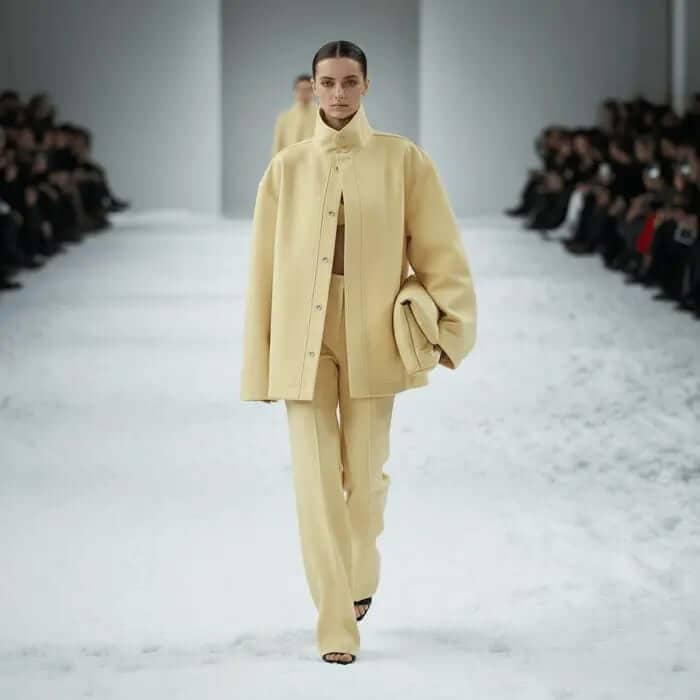
Step 1: Identify Which Runway Trends Are Worth Your Investment
Not every look that walks the runway deserves a place in your content calendar. Ecommerce managers need to think commercially, not just aesthetically, and that means filtering trends through search data before committing resources.
Start with the collections that generate the most press coverage. When multiple major designers show the same silhouette, color palette, or fabrication in the same season, that's a signal of consensus trend direction, not just a single designer's vision. The Spring/Summer 2024 season, for example, saw sheer layering appear across Valentino, Prada, and Jacquemus, which signaled clearly that the trend had commercial legs beyond the runway.
Use Google Trends to validate before you create. Type in the trend term your customer would actually search, not the fashion industry jargon, but the consumer language. "Sheer top outfit ideas" outperforms "transparency trend SS24" by orders of magnitude in actual search volume. Build your content around how your customer talks, not how WWD writes.
Pinterest Trends is equally valuable and often underused. It surfaces rising searches weeks before they appear prominently on Google, giving ecommerce teams an early signal to act on. If "ballet flats styling" is climbing on Pinterest in August, you have a four-to-six week window to publish content before Google competition intensifies.
The filter question for every trend you evaluate: Can we create compelling product content around this within two weeks? If the answer is no, because of shoot availability, product lead times, or budget, AI content generation changes that calculus entirely.
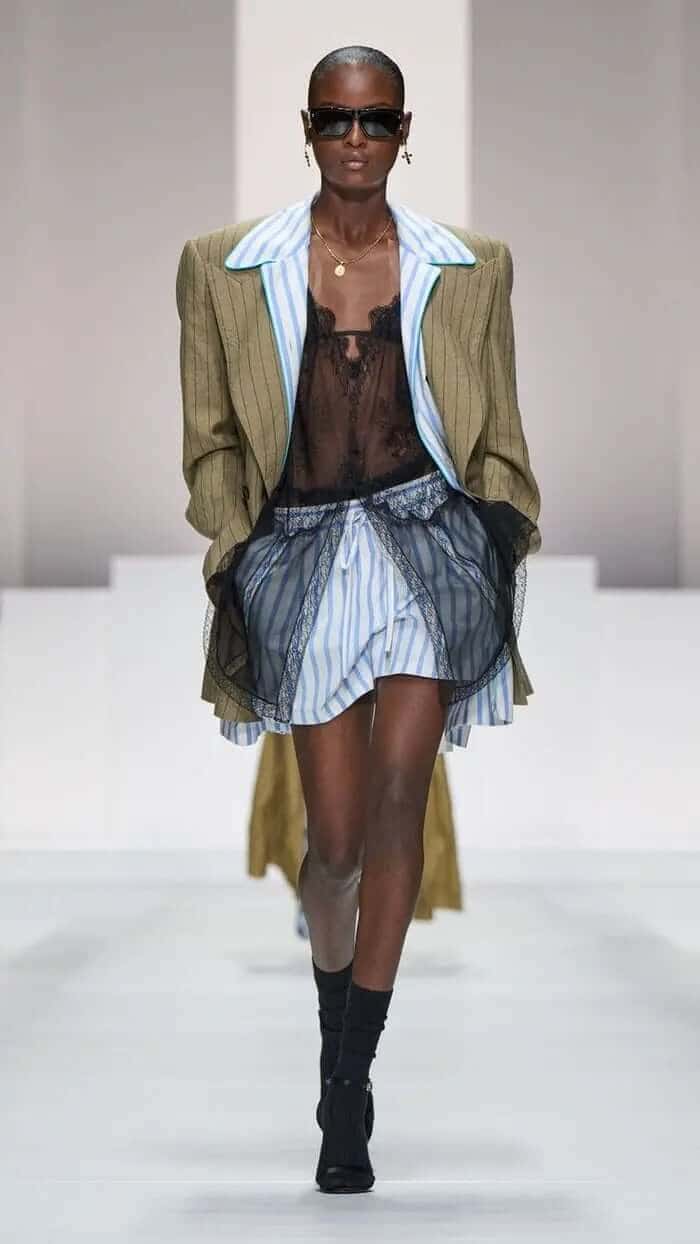
Step 2: Use AI to Close the Production Timeline Gap
This is where the runway to ecommerce workflow fundamentally changes with modern tools.
Traditional product photography for a seasonal trend activation might look like this: identify the trend, pull relevant SKUs, book a model and photographer, style the shoot, shoot, edit, write copy, upload. Four to six weeks minimum, often longer. By the time that content is live, early-adopter consumers have already moved on.
With AI imagery, the kind Modelia produces for ecommerce teams, that timeline compresses to days. The production method behind that speed is covered in depth in our guide to virtual try-on for e-commerce — specifically how AI tools generate catalog-ready on-model imagery from a single product photo, without a photoshoot. A marketing team can take a product that's already in their catalog, apply a runway-inspired visual treatment using AI models and virtual styling, and publish trend-relevant content while the search interest is still climbing.
Concretely, this means an ecommerce manager can see the "office siren" aesthetic dominating social media in October, identify which existing products in their assortment fit that aesthetic, and generate a full set of on-model images, lifestyle shots, and editorial visuals within 48 to 72 hours, without a single physical shoot.
The content quality matters here. AI fashion imagery has moved well beyond obvious artificiality. When trained on brand-specific aesthetics and product details, modern AI image generation produces visuals that are indistinguishable from traditional photography at the editorial level, and often more consistent, because the lighting, pose, and styling variables are controlled precisely.

Step 3: Build Trend Content in Layers
The most effective runway trends ecommerce content strategy doesn't publish a single piece per trend. It builds in layers, each targeting a different stage of the consumer's journey.
Layer one: Trend awareness content. Published immediately after or during fashion week, this content targets early adopters and fashion-engaged consumers who are actively searching for trend information. Examples include "The Biggest Trends from [Season] Runway," "What Designers Are Saying About [Trend]," and trend-focused lookbooks. This content prioritizes editorial credibility and topical authority, it tells Google that your site is a relevant source on this topic.
Layer two: Styling and inspiration content. Published four to six weeks later, when search volume is climbing, this content bridges the gap between runway aesthetics and shoppable products. "How to Wear [Trend] in Real Life," "5 Ways to Style [Product] for the [Trend] Look," and "The [Trend] Edit" are formats that perform consistently well. These pages drive high-intent organic traffic and link naturally to product pages.
Layer three: Conversion content. At peak trend season, the consumer is ready to buy. This is when your product pages, collection pages, and curated edits need to be fully optimized with trend-relevant copy and imagery. If your AI-generated visuals are live and indexed by this point, you capture the commercial intent traffic that represents the highest return on your content investment.
This layered approach is what separates ecommerce brands that use content as a traffic channel from those that treat it as an afterthought.
Step 4: Optimize Every Visual Asset for Search
Most ecommerce teams focus their SEO efforts on written content and overlook the significant organic traffic opportunity in image search. For fashion, this is a costly mistake.
Google Images is a primary discovery channel for fashion consumers. When someone searches "wide leg trouser outfit ideas" or "how to style a trench coat," image results appear prominently — and those clicks lead directly to product pages. Capturing that traffic requires deliberate optimization of every visual asset you publish.
File naming is the first and most overlooked step. An image named "IMG_4892.jpg" tells Google nothing. An image named "wide-leg-trouser-runway-trend-outfit.jpg" signals exactly what the image shows and increases its chances of appearing in relevant image searches. Apply this to every product image, lifestyle shot, and editorial visual you publish.
Alt text should describe the image accurately and naturally include your target keywords. For a runway-inspired product shot, effective alt text might read: "Model wearing wide-leg cream trousers styled for the quiet luxury runway trend." That's descriptive, keyword-relevant, and useful for accessibility, all factors Google considers in image ranking.
Page load speed affects both user experience and search ranking, and high-resolution fashion imagery is one of the most common causes of slow ecommerce pages. Compress images without sacrificing visual quality, tools like WebP format and lazy loading ensure your content loads fast even with multiple editorial images per page.
One specific advantage of AI-generated imagery in this context: because the images are produced digitally rather than photographed, they can be exported at precisely optimized file sizes and dimensions from the start, eliminating the compression and reformatting step that adds time to traditional production workflows.
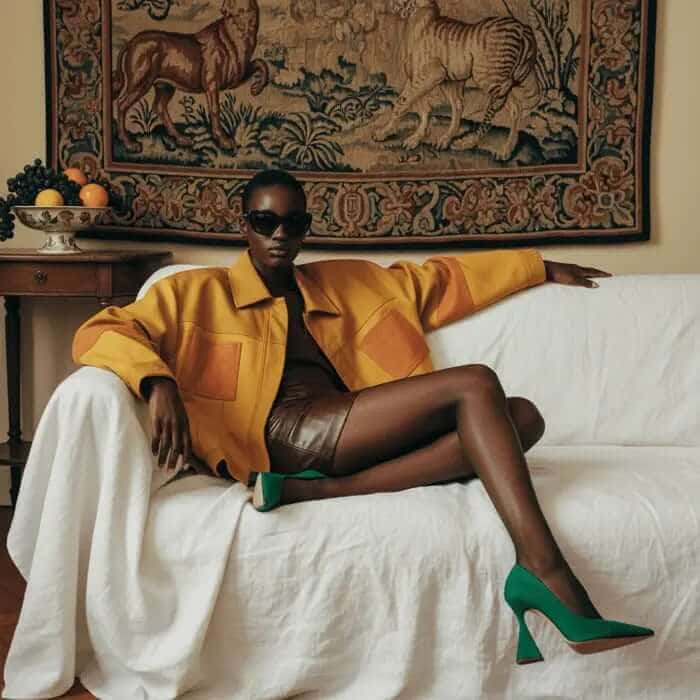
Step 5: Connect Content to Commerce With Internal Linking
The final piece of a high-performing runway to ecommerce content strategy is making sure your editorial content actually drives product discovery and purchase.
Every trend awareness article should link to at least two or three relevant product pages or collection pages. Every styling guide should feature shoppable products with direct links. Every lookbook should have a clear path to purchase for every item featured. This internal linking structure serves two purposes: it helps Google understand the relationship between your content and your products, improving the ranking potential of both, and it guides shoppers naturally from inspiration to transaction.
The anchor text you use for internal links matters for SEO. Instead of linking with generic text like "click here" or "shop now," use descriptive anchor text that includes relevant keywords: "shop the wide-leg trouser collection," "explore our quiet luxury edit," or "see all sheer overlay styles." These small details compound over time into meaningful ranking improvements.
Track which content pieces drive the highest product page visits and conversion rates, and use that data to inform your next content cycle. Fashion content strategy is not a one-time project, it's a feedback loop that gets more efficient with every season.
What This Looks Like in Practice
To make this concrete: imagine your ecommerce team identifies that "coastal grandmother aesthetic" is trending after appearing across multiple Spring runway shows and gaining significant traction on Pinterest.
Within the first week, you publish a trend awareness article, "The Coastal Grandmother Aesthetic: What It Is and How to Wear It", optimized for early-stage search queries. This article features AI-generated editorial imagery showing the aesthetic in lifestyle contexts, produced by Modelia in under 48 hours.
Three weeks later, you publish a styling guide, "5 Coastal Grandmother Outfits You Can Shop Right Now", that links directly to relevant product pages. The on-model product images on those pages were generated by Modelia to reflect the specific styling codes of the trend: linen textures, relaxed silhouettes, muted coastal palettes.
By the time the trend hits peak search volume six to eight weeks after you first identified it, your site has two indexed articles targeting informational queries, product pages with trend-optimized imagery and copy targeting commercial queries, and internal links connecting the full content journey. You're capturing traffic at every stage of the funnel, and you did it without a single traditional photo shoot.
Conclusion
The brands that consistently win at runway to ecommerce are not the ones with the largest production budgets. They're the ones with the most efficient systems, teams that can identify a trend, create compelling content around it, and get that content live before the search demand peaks.
AI-powered content production is what makes that speed possible at scale. At Modelia, we've built our platform specifically for ecommerce teams who understand that fashion content strategy is a competitive advantage, and that the window between runway and retail is shorter than ever.
The runway is already setting the agenda for next season. The question is whether your content will be ready when your customer starts searching. Modelia helps enhance your ecommerce visuals with AI. Try it for free.


