

Quick answer: Most fashion brands trying to sell clothes on Instagram hit the same wall — not a strategy problem, but a content production problem. Flat-lay and product-only images underperform on-model shots by 20–30% in conversion, yet traditional photoshoots can't keep pace with the volume Instagram's algorithm rewards. Brands like Desigual, Forever 21, and Reebok use Modelia to generate AI on-model imagery, video, and model variations at catalog scale — so every SKU looks like a hero piece, not a back-catalog afterthought.
Here's what most guides on how to sell clothes on Instagram get wrong: they skip straight to hashtags and posting schedules. They assume your catalog team already has a folder full of on-model shots ready to go.
It doesn't work that way. The brands that consistently convert on Instagram aren't winning because of better captions. They're winning because they solved the visual content problem first. 95.6% of top fashion ecommerce brands use on-model photography — and on-model images convert 20–30% higher than flat lays across most clothing categories, according to aggregated Shopify merchant data reported by Photta. A flat lay shows a garment. An on-model image answers the question every shopper is actually asking: how will this look on a person?
The problem is traditional photoshoots take 2–4 weeks from booking to final delivery. For a brand adding 40 new SKUs a month and posting 3–5 times a week, that math doesn't work. This guide covers how AI tools close that gap — and then how to build the rest of your Instagram selling strategy around the content you can now actually produce. If you're thinking about how Instagram fits into your wider campaign mix, Modelia's AI for fashion marketing platform is built for exactly that.
Why Flat Lays Aren't Enough to Sell Clothes on Instagram
Before getting into tools and tactics, it's worth being specific about what flat lays cost you — because a lot of brands are still defaulting to them for the bulk of their feed content without realising the conversion gap they're accepting.
What a Flat Lay Can't Tell a Shopper
- How the fabric drapes and moves on a body
- How the fit reads across different body types
- Where the hem sits, how the shoulder falls, how it layers
- What occasion it suits and what to wear it with
On Instagram, a customer makes a buying decision in under two seconds of scrolling. There's no product description, no zoom, no size guide. The image is doing all the work. A flat lay asks the shopper to imagine how the garment fits. An on-model image shows them.
That gap is measurable. Online return rates average 21% higher than in-store, with 42% of consumers citing size and fit as the reason for their last return — per Narvar's State of Returns report. Better on-model imagery doesn't just improve conversion — it reduces the returns that eat into your margin after the sale.
Why Most Brands Still Default to Flat Lays
The case for on-model content is clear. So why do so many brands still rely on flat lays for most of their feed? Because traditional photoshoots are expensive, slow, and don't scale.
A single shoot day — photographer, model, stylist, studio — covers 15 to 30 looks. For a brand dropping 40 new SKUs a month, that means booking shoots constantly, waiting weeks for retouching, and still never having enough content to post at the frequency Instagram rewards. So on-model shots get reserved for hero pieces, and flat lays fill the rest of the feed.
AI changes that equation. Here's how.
How to Sell Clothes on Instagram Without a Photoshoot for Every Product
The first and most immediate bottleneck is turning your existing product photos into on-model content — without booking a shoot.
Flatlay to model AI takes a flat-lay photo of a garment and generates a photorealistic on-model image. No model booking, no studio, no retouching queue. A catalog team can produce a finished on-model shot the same day they photograph the product flat.
What This Means for Your Instagram Feed
Traditional Photoshoot Flatlay to Model AI Time to first usable image 1–3 weeks Same day Cost driver Photographer, studio, model, stylist Existing flatlay photo SKUs covered per week Limited by shoot schedule Entire catalog Model variation Fixed to who's booked Adjustable per image Reshoot for new campaign New shoot day required New generation, same source image For a brand posting 3–5 times a week across a catalog of hundreds of SKUs, this isn't a marginal improvement. It means every product can have on-model imagery ready before it goes live — not just the hero pieces.
The Instagram-Specific Advantage
Instagram's algorithm rewards fresh content and consistent posting. Brands that can only produce on-model shots for 20% of their catalog end up posting flat lays for the rest, which means lower engagement, lower conversion, and less algorithmic reach. Flatlay to model AI removes that ceiling.
Desigual and Forever 21 use Modelia's platform to maintain this kind of output at scale — consistent on-model imagery across their full catalog, without a photoshoot for every product drop.
How to Sell Clothes on Instagram to Different Audiences Without Rebooking Shoots
Having on-model imagery is the baseline. The brands that go further on Instagram use visual variety to speak to different segments of their audience — and to keep the same products looking fresh across multiple campaigns without rebooking a shoot.
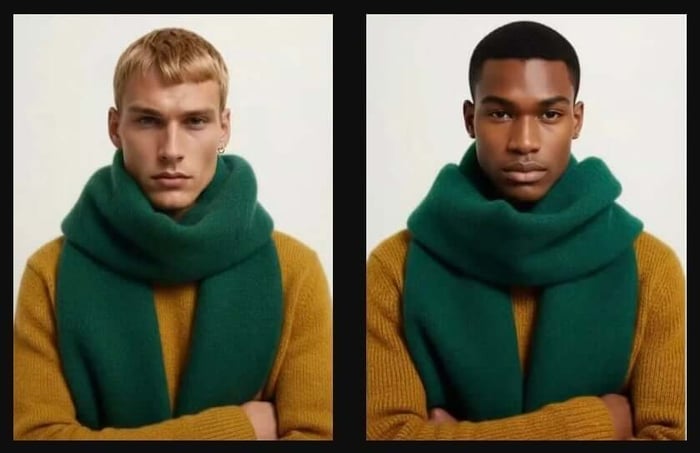
Model to model AI swaps the model or background in an existing image while keeping the garment unchanged. One product photo becomes several distinct pieces of content.
Three Ways Fashion Brands Use This on Instagram
1. Audience segmentationDifferent customers respond to different models. A brand selling across age groups, body types, or geographies can show the same garment on different models for different audience segments — without producing separate shoot days for each.
2. DEI representationMatching your visual content to the diversity of your actual customer base isn't just brand positioning. It's commercial. Shoppers are more likely to convert when they can see themselves in your imagery. Model to model AI makes this achievable without the casting and logistics overhead of a diversified shoot.
3. Campaign refreshRunning the same garment across a seasonal campaign, a paid ad, and a re-engagement post doesn't mean showing the same image three times. Swap the model, swap the background, and the same product becomes new content for each placement.
Why This Matters for Paid Social
When you're running Instagram ads, creative fatigue is one of the fastest ways to watch ROAS drop. Model to model AI gives your media team a way to refresh ad creative from existing assets — changing the model or context without going back to production.
How to Sell Clothes on Instagram With Video When You Have No Production Budget
Static product photos are no longer sufficient to compete for attention on Instagram. Video drives the algorithm — and the brands leaning into it are pulling ahead.
Reels generate roughly 67% higher engagement than standard feed posts, and brands running a Reels-first strategy report 41% higher follower growth than those relying mainly on static images (Digital Applied, 2026). For a fashion brand, every SKU shown only as a still photo is underperforming its potential reach.
The problem: most catalog teams don't have a video production budget for every product. Filming and editing even a five-second clip for 40 new SKUs a month isn't realistic without a dedicated production team.
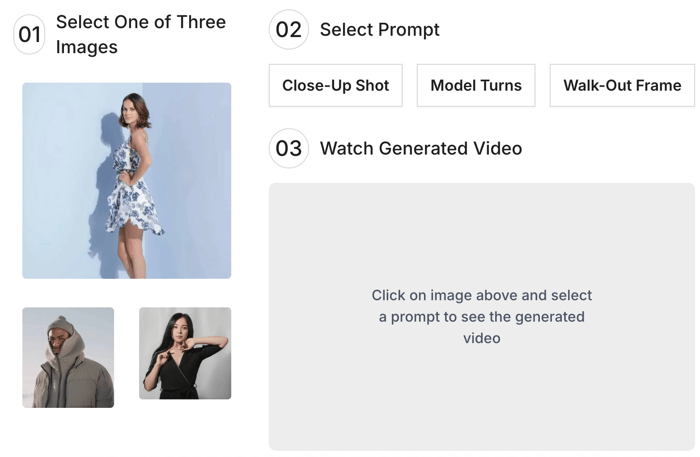
AI video generator for fashion closes that gap. Upload an existing product image, describe the motion — a slow zoom, fabric movement, a model turn — and generate a 5 or 10-second video ready to publish. No filming, no editing, no production schedule.
Where Video Fits in Your Posting Mix
- Product detail Reels showing fabric movement, fit, and styling from multiple angles
- Story-based Shop Now prompts paired with a clear CTA — these consistently lift conversion over static Story posts
- Campaign teasers ahead of a collection launch, built from existing hero shoot assets
- Ad creative — short product videos outperform static images in Instagram's paid placements for most apparel categories
The result is a feed that mixes on-model stills, video, and Stories — exactly the content mix Instagram's algorithm rewards — without requiring a separate production workflow for each format.
How to Sell Clothes on Instagram: Setting Up Instagram Shopping
Once your visual content problem is solved, the commerce infrastructure needs to be right. A great-looking feed that isn't shoppable is just brand awareness.
You'll need a Meta Business Suite account connected to a product catalog through Shopify, BigCommerce, or another supported platform. Approval typically takes a few business days. Once live, you can tag products directly in posts, Stories, and Reels.
What Your Business Profile Needs
- A business or creator account — required to access Instagram Shop, analytics, and promotion tools
- A clear bio that states what you sell and who it's for, with one link to your storefront
- Story Highlights covering sizing, shipping, and returns — reduces DMs and pre-purchase friction
- A connected product catalog, synced and kept current as inventory changes
Why the Setup Matters for Conversion
Businesses with Instagram Shops generate 44% more revenue from the platform than those without one, and native checkout conversion on optimized storefronts now runs at 3.1% (Digital Applied, 2026). Product tags aren't decorative either — one brand, Native Union, recorded a 2,662% increase in traffic from just nine product-tagged posts. Tagging removes friction at exactly the moment a customer is deciding whether to act.
Apparel already converts well on the platform: shoppers are 12% more likely to buy clothing on Instagram than on any other social platform (Dataopedia, 2026). A properly set-up Shop captures that advantage instead of leaving it to a competitor.
How to Sell Clothes on Instagram With the Right Hashtags and Captions
Hashtags and captions are what get your post seen — and what convince someone to act once they're looking at it.
Choosing Hashtags for a Brand Catalog
The best hashtags for selling clothes on Instagram aren't generic reseller tags. They're a deliberate mix of three types:
- Branded hashtags unique to your company, consistent across every post — this builds a searchable archive of your content over time
- Category hashtags tied to the specific product type — a denim jacket needs different tags than a swim cover-up
- Trend or seasonal hashtags that connect a current product drop to what's already being searched that week
Rotate category and seasonal tags by launch. Keep your branded hashtag fixed. That combination gives you both discovery reach and long-term content findability.
Writing Captions That Convert
A caption's job is to answer the question a customer would ask before tapping "Shop Now." Lead with fit, fabric, or styling detail — not a generic line about the product being "perfect for you."
- Name the specific use case: a blazer for client meetings reads differently than one for travel
- Include a sizing or fit note directly in the caption — this is the most common pre-purchase DM question
- End with one clear call to action: shop the tag, swipe up in Stories, or link in bio
How to Sell Clothes on Instagram With Influencers and Ads
Organic content and Shopping tags build the foundation. Paid reach and influencer partnerships accelerate it.
Choosing the Right Approach for Your Stage
Approach Best For Typical Lead Time Cost Profile Organic posting + Shopping tags Brands building an audience from scratch Ongoing, low lead time Lowest cost, slowest growth Paid ads (Stories, Reels, carousel) Brands with proven creative and a defined audience Days Scales with ad spend Micro-influencer partnerships Brands wanting niche credibility and UGC-style content Weeks (sourcing, negotiation) Mid-cost, often product + fee Micro-influencers tend to deliver stronger engagement per follower than large accounts — their audiences are smaller and more aligned to a specific niche. For a deeper breakdown of vetting and structuring those partnerships, our guide to influencer marketing for fashion brands covers the full process.
How to Sell Clothes on Instagram: Track What's Actually Working
Posting consistently means nothing if you can't tell which content is driving sales.
Metrics That Matter for a Catalog Team
- Product tag taps — which items are generating interest before a click-through
- Website clicks and conversions from Instagram — tracked through your ecommerce platform, not just Instagram Insights
- Reels completion rate — a signal of whether your video content holds attention long enough to matter
- Performance by content type — comparing on-model stills, Reels, and Stories for the same product
Pull this data monthly and feed it back into your content plan. If Reels are consistently outperforming static posts for a given category, that's the signal to shift more of your catalog into video using the AI video generator for fashion rather than producing more static shots.
Frequently Asked Questions About How to Sell Clothes on Instagram
How can I sell clothes on Instagram as a fashion brand?
Connect a business account to a product catalog through Shopify or another supported ecommerce platform, enable Instagram Shopping to tag products in posts, Stories, and Reels, and build a consistent pipeline of on-model content. The setup is straightforward — the constraint most brands hit is producing enough on-model imagery to post at the frequency Instagram rewards.
Do I need a business account to sell on Instagram?
Yes. A business or creator account is required to access Instagram Shop, product tagging, and the analytics tools needed to track what's converting.
How many times a week should a fashion brand post on Instagram?
Top-performing retail brand accounts post close to twice a day on average, while typical business accounts manage under two posts daily. Brands without a steady content pipeline usually fall short of this, which limits catalog visibility and algorithmic reach.
What type of content sells the most clothing on Instagram?
On-model imagery consistently outperforms flat lays, with conversion rates 20–30% higher across most clothing categories. Video — particularly Reels — drives significantly higher engagement than static posts. The highest-converting feed combines on-model product shots, short product videos, and Story-based shopping prompts.
Why do on-model images convert better than flat lays on Instagram?
A flat lay shows what a garment looks like folded or hung. An on-model image shows how it fits, drapes, and moves on a body — which is the actual question a shopper is trying to answer before buying. On Instagram, where there's no product description or zoom function, the image has to answer that question on its own.
What are the best hashtags for selling clothes on Instagram?
Use a fixed branded hashtag on every post, category hashtags specific to the product type, and seasonal or trend hashtags tied to the current drop. Branded hashtags should never rotate — they build your searchable content archive over time.
What's the best way to start selling clothes on Instagram as a brand?
Connect your catalog to Instagram Shopping first, so every post is shoppable from day one. Then solve for content volume — specifically on-model imagery — before worrying about posting frequency or hashtag strategy. Brands that try to scale posting without a content pipeline stall within weeks.
Can I sell clothes on Instagram without running paid ads?
Yes. Organic posting with Shopping tags and consistent on-model content is enough to start generating sales, especially for brands with an existing audience. Paid ads and influencer partnerships accelerate reach once the organic foundation is in place.
The Bottom Line
Selling clothes on Instagram comes down to one thing before anything else: visual content that shows shoppers how your garments actually look on a person. Get that right at catalog scale, set up your Shop correctly, and the rest of the strategy — hashtags, ads, influencers, analytics — has something real to build on. The brands consistently converting on Instagram aren't posting more. They're posting better.
FAQs
How can I sell clothes on Instagram as a fashion brand?
Connect a business account to a product catalog through Shopify or another supported ecommerce platform, enable Instagram Shopping to tag products in posts, Stories, and Reels, and build a consistent pipeline of on-model content. The setup is straightforward — the constraint most brands hit is producing enough on-model imagery to post at the frequency Instagram rewards.
Do I need a business account to sell on Instagram?
Yes. A business or creator account is required to access Instagram Shop, product tagging, and the analytics tools needed to track what's converting.
How many times a week should a fashion brand post on Instagram?
Top-performing retail brand accounts post close to twice a day on average, while typical business accounts manage under two posts daily. Brands without a steady content pipeline usually fall short of this, which limits catalog visibility and algorithmic reach.
What type of content sells the most clothing on Instagram?
On-model imagery consistently outperforms flat lays, with conversion rates 20–30% higher across most clothing categories. Video — particularly Reels — drives significantly higher engagement than static posts. The highest-converting feed combines on-model product shots, short product videos, and Story-based shopping prompts.
Why do on-model images convert better than flat lays on Instagram?
A flat lay shows what a garment looks like folded or hung. An on-model image shows how it fits, drapes, and moves on a body — which is the actual question a shopper is trying to answer before buying. On Instagram, where there's no product description or zoom function, the image has to answer that question on its own.
What are the best hashtags for selling clothes on Instagram?
Use a fixed branded hashtag on every post, category hashtags specific to the product type, and seasonal or trend hashtags tied to the current drop. Branded hashtags should never rotate — they build your searchable content archive over time.
What's the best way to start selling clothes on Instagram as a brand?
Connect your catalog to Instagram Shopping first, so every post is shoppable from day one. Then solve for content volume — specifically on-model imagery — before worrying about posting frequency or hashtag strategy. Brands that try to scale posting without a content pipeline stall within weeks.
Can I sell clothes on Instagram without running paid ads?
Yes. Organic posting with Shopping tags and consistent on-model content is enough to start generating sales, especially for brands with an existing audience. Paid ads and influencer partnerships accelerate reach once the organic foundation is in place.

