

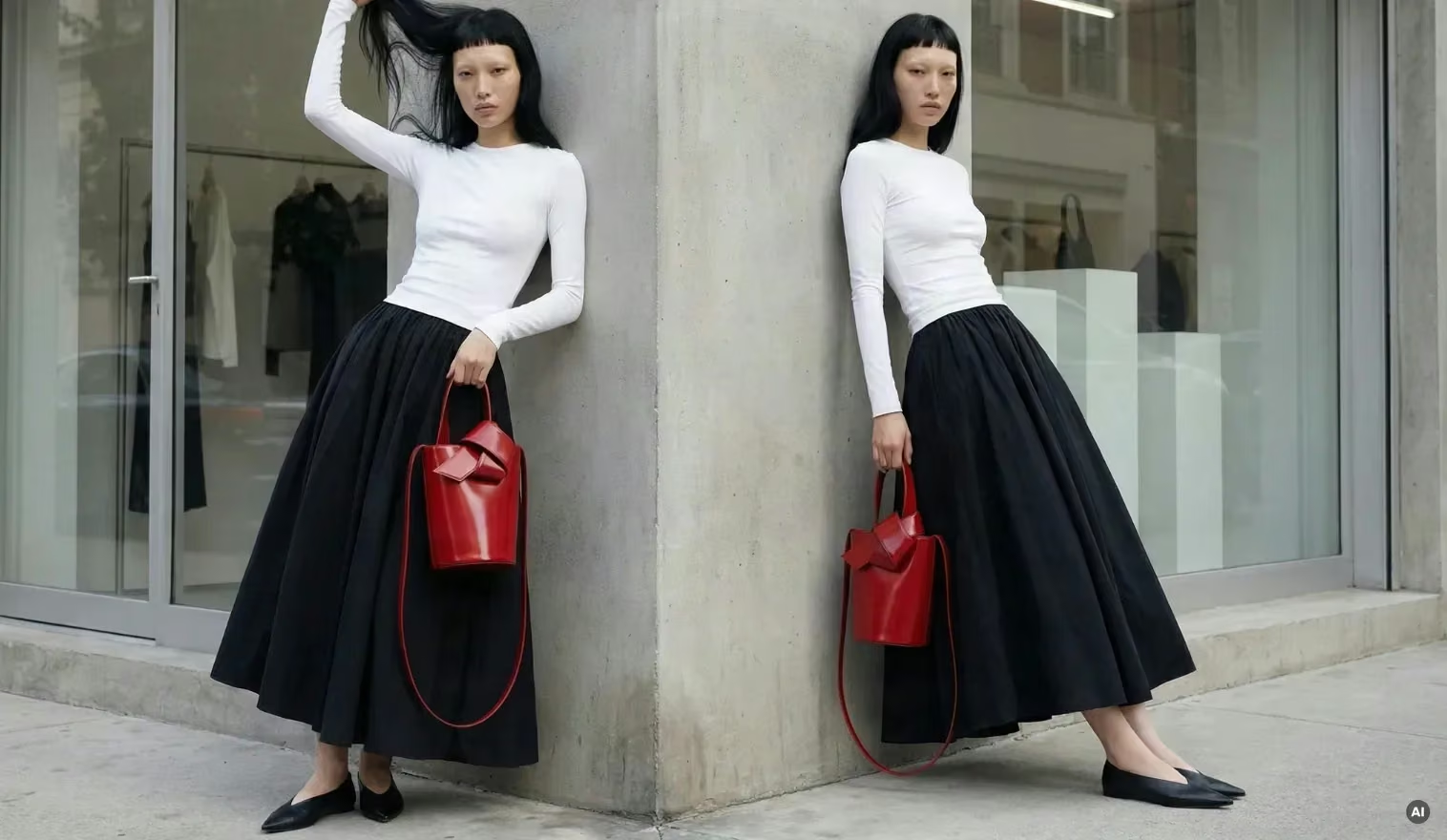
The editorial-style photos we see in magazines, so incredibly aspirational, were a luxury for clothing brands until recently. Not everyone can afford a photoshoot with professional models and photographers to promote their brand on social media and through all kinds of advertising. However, this is about to change thanks to the use of artificial intelligence. With AI tools, brands can now generate visuals worthy of luxury brands; you just need to know how to get the most out of them to get that editorial fashion content with AI. That's why at Modelia, we've included a guide of prompts for generating the best visuals in our 2025 yearbook, and in this blog, we're going to teach you how to get the most out of our tool so you can make your brand shine like never before.
Understanding Editorial Fashion Content
Before diving into prompts, it’s important to understand what sets editorial fashion content apart from standard fashion imagery. Editorials tell a story, they evoke emotion, build a world and express a brand’s visual identity through concept, lighting and styling.
An AI fashion editorial is no different but instead of cameras and sets, you use language to direct your vision so the AI becomes your creative collaborator. Think of your prompt as a digital version of an art director’s brief. The more clearly you describe your vision: the model, the styling, the environment, the lighting; the closer the result will align with your concept.
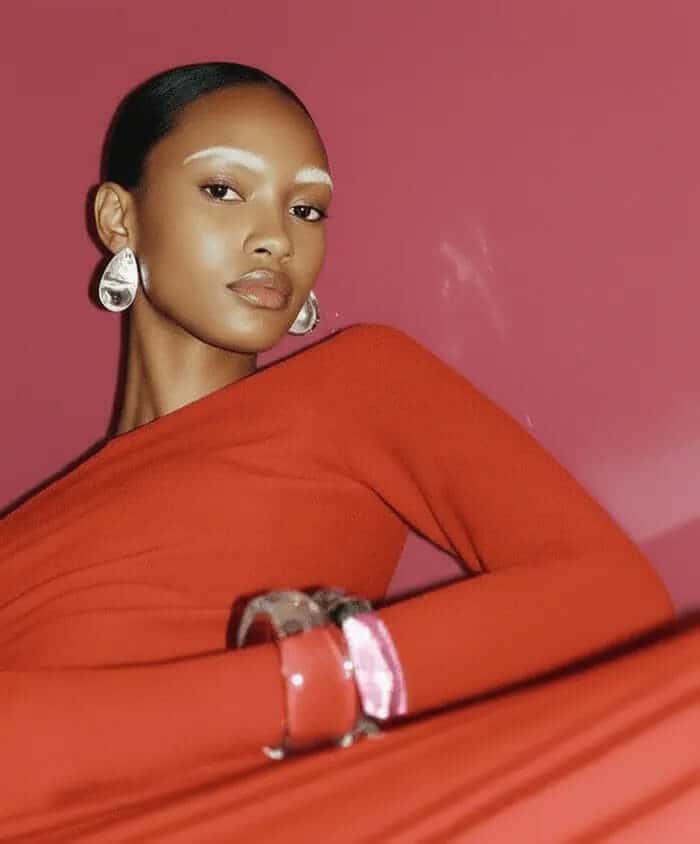
The Anatomy of a Great Fashion Prompt
Every strong AI fashion prompt has four main components:
Subject – Who or what you want in the image (model, outfit, accessories).
Styling – Describe the fashion details: fabrics, silhouettes, textures and mood.
Setting – The environment or backdrop: studio, street, desert, futuristic runway, etc.
Lighting and Mood – The tone of the image: cinematic, soft, high contrast, warm tones.
To create the best visuals, the prompt should be as detailed as possible. A good tip is to gather reference images and create a mood board before you start creating to have a clear idea of the type of images you want to generate, the poses, lighting, colors and angles that best represent your brand.
How to Build AI fashion Prompts Step by Step
Let’s break down the process of crafting your own fashion AI prompt guide.
Start with the model
Describe the model’s type, gender and presence. Editorial fashion often thrives on diversity so try using terms like “runway model,” “avant-garde look,” “freckled face,” “mature beauty,” “androgynous model” or “ethereal appearance.”
Define the outfit
This is the heart of the prompt. Include the fabric, style and structure all in a very detailed way. For example:
“Wearing a structured black blazer with exaggerated shoulders”
“In a flowy silk gown with metallic embroidery”
“Minimalist white jumpsuit made of linen”
Be VERY specific, the AI reacts better when it understands the textures and fashion design details. You can even help you with other text AI tools to describe the garments perfectly and that way be 100% sure the garment in the photo generated is the one you want to sell.
Set the environment
Editorial fashion often relies on atmosphere. You can describe studio settings (“in a minimalist white studio with soft shadows”) or location settings (“standing in a Parisian street at dusk,” “in a surreal desert landscape”). This background setting adds narrative and transforms the image from a catalog shot into a story.
Add lighting and tone
Lighting defines emotion and it is a key element that sometimes people forget to introduce in our prompts but can make the difference. Some examples:
“Golden-hour sunlight with soft glow”
“Moody studio lighting with deep contrast”
“Dreamy pastel tones and cinematic shadows”
Lighting terms like dramatic, backlit, softbox, neon glow or natural daylight can change the entire feel of an image.
Define the mood or creative style
Finally, specify the emotional tone; this tells AI how to interpret the story. Use keywords like editorial, high-fashion, avant-garde, romantic, gritty, minimalist or surreal.
Example Prompts and the Results They Create
Below are examples of well-structured prompts and what kind of visuals they generate.
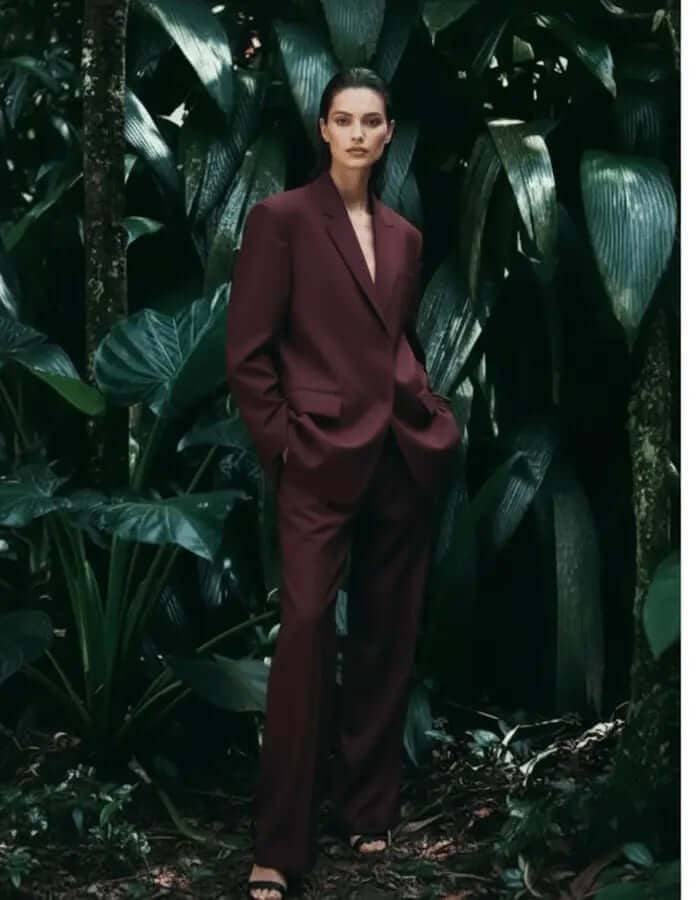
1. Modern Nature Editorial
Prompt:
A high-fashion editorial portrait set in a lush tropical forest with deep green foliage and dramatic natural shadows. A woman stands confidently at the center, wearing an elegant deep burgundy tailored suit with a structured blazer and wide-leg trousers. Her hands are relaxed in her pockets, accentuating the minimal and powerful silhouette. She wears simple dark sandals that blend subtly into the natural environment. The model has a sleek, wet-look hairstyle pulled back tightly, highlighting her strong facial structure, sharp cheekbones, and intense gaze. The lighting is soft but directional, creating contrast between the rich greenery and the refined sophistication of the outfit. The atmosphere is cinematic, moody, and luxurious, blending nature and high fashion in a striking visual composition.
Result:
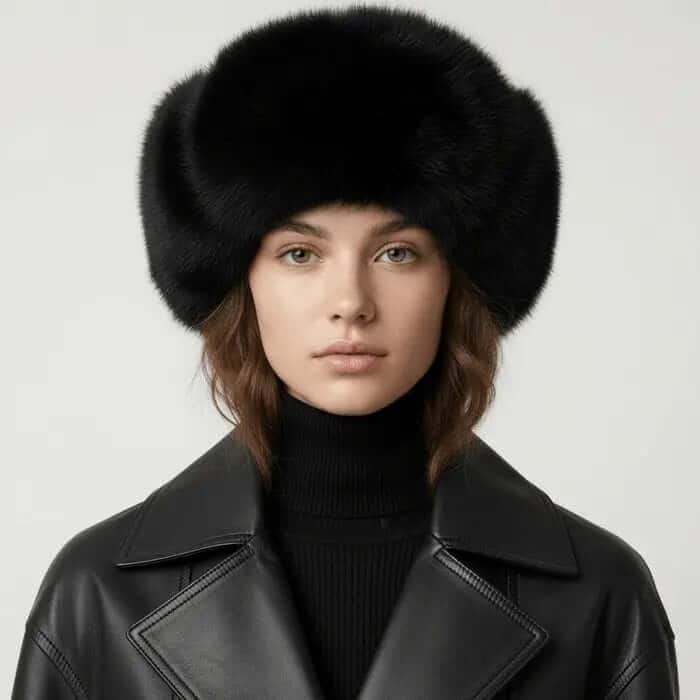
2. Portrait
Prompt:
A high-fashion studio portrait captured against a clean, soft white background. At the center stands a woman with a calm, poised expression, styled in a luxurious winter look. She wears a black faux-fur Russian-style hat with a voluminous, rounded silhouette framing her face elegantly. Her outfit features a sleek black leather coat layered over a ribbed black turtleneck, creating a monochromatic and sophisticated aesthetic. The lighting is soft and even, highlighting the texture of the fur hat, the smooth shine of the leather, and the model’s refined facial features. The mood is minimalist, polished, and editorial, emphasizing modern cold-weather luxury with a timeless fashion sensibility.
Result:
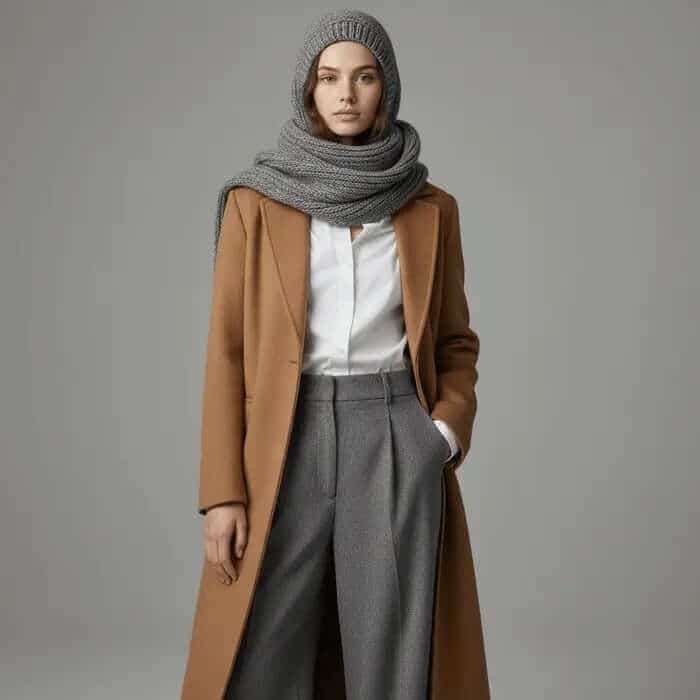
3. Glamour Editorial
Prompt:
A full-body fashion portrait captured in a clean, minimalist studio setting with soft, diffused lighting. A woman stands facing the camera with a calm, composed expression, dressed in a luxurious winter ensemble. She wears a long camel-colored wool coat layered over a crisp white button-down shirt, paired with relaxed, wide-leg grey wool trousers. A thick, textured grey knit scarf is wrapped generously around her neck and shoulders, complementing a matching ribbed knit balaclava that frames her face. Her hands rest naturally at her sides, one tucked casually into her pocket, giving the pose an effortless, modern elegance. The color palette is muted and sophisticated—camel, white, and soft grey—evoking a sense of refined minimalism and Scandinavian-inspired winter styling. The mood is serene, contemporary, and editorial, emphasizing texture, layering, and timeless cold-weather design.
Result:
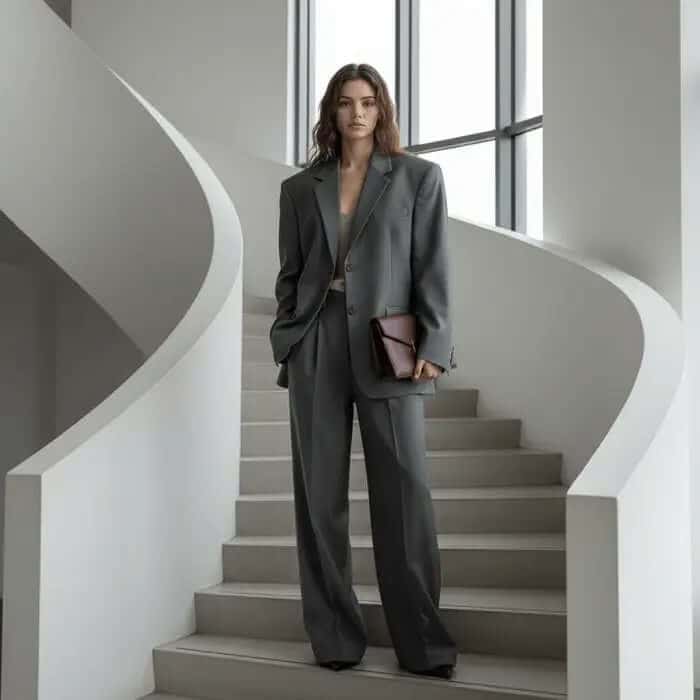
4. Avant-Garde Conceptual Editorial
Prompt:
Fashion editorial portrait of a woman wearing an oversized grey tailored suit, standing on a minimalist staircase. She holds a burgundy clutch bag, with a relaxed yet confident pose, soft natural makeup, loose slightly wavy hair. Clean architectural background, neutral tones, soft diffused lighting, modern editorial aesthetic.
Result:
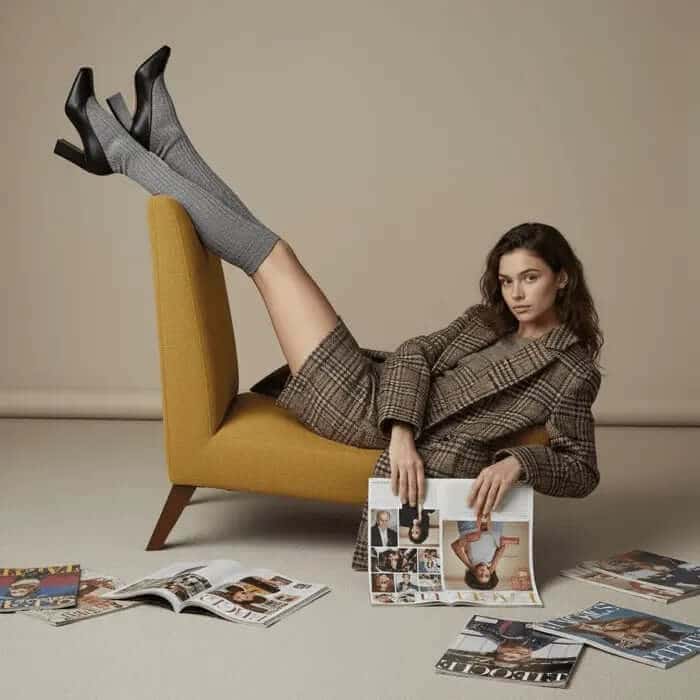
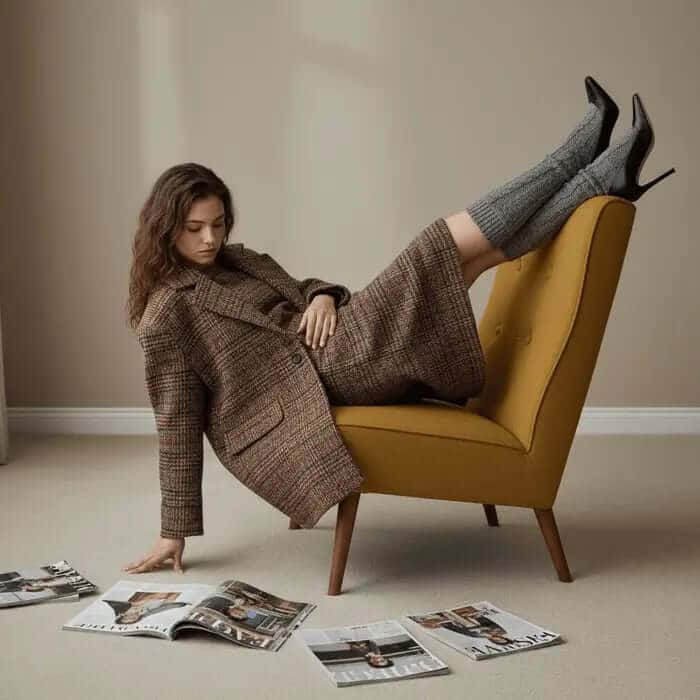
5. Funny editorial
Prompt:
Create a high-quality fashion photograph of a brunette woman with medium-length wavy dark hair, lounging on a mustard-yellow armchair that is tipped backward. Her legs are lifted and resting on the backrest, wearing tall grey knitted socks and black square-toe high heels. She is dressed in a textured brown-and-red plaid coat and matching skirt. She is leaning slightly to the side while reading an open magazine on the floor. Several magazines are scattered on the light carpet around her. The room has soft, neutral lighting and beige walls, with a minimalistic and calm atmosphere. Keep the same pose, composition, perspective, colors, and styling as described.
Result:
Creative Tips for Consistent AI Results
Getting strong AI-generated fashion content takes more than good prompts, it’s about understanding how AI interprets artistic direction.
1. Refine your prompt, don’t replace it.
AI often gets better results with slight adjustments. Change one variable at a time: lighting, color, or pose, to find what works best.
2. Use fashion language.
The AI performs best with vocabulary that reflects the industry: runway, editorial, couture, textured fabric, model pose, studio shot. This gives your prompt more professional context.
3. Think in visual storytelling.
Every editorial should have a mood or message, futuristic optimism, summer nostalgia, quiet luxury. Guide your prompt toward emotion, not just description.
4. Avoid overloading your prompt.
Too many details can confuse the AI. Keep sentences short and purposeful. Three to five strong visual elements are usually enough.
5. Play with camera angles and depth.
Words like wide shot, close-up, portrait mode, or cinematic composition can help define how the image feels.
Using Modelia to Perfect Your AI Editorials
Modelia has become one of the top tools for fashion creatives looking to master AI generated fashion content. Its advanced styling and lighting features allow users to test poses, experiment with fabrics and visualize collections before production.
With Modelia’s Repose tool, you can adjust a model’s position for dynamic composition, while the Smart Styler helps visualize garments with lifelike textures and folds. Whether you’re building an editorial campaign or an ecommerce catalog, these tools help maintain professional consistency. In fact, all of the images you can see in this article are created using these tools.
With Modelia you can create a full campaign in just minutes if you master the art of prompting. From product images to ecommerce and editorial style, all of those can be done using just one tool in the Modelia Studio.
Why AI Editorials Are Changing Fashion
The future of fashion editorial AI isn’t about replacing creativity but about expanding it. Designers can now test hundreds of visual ideas before committing to a single photoshoot and brands can personalize campaigns instantly. Even small fashion labels can compete visually with global houses.
In 2026, editorial content is becoming more dynamic, inclusive and experimental because AI gives creatives the freedom to imagine without limits.
Recap
Creating editorial fashion content with AI is both an art and a process. The more you experiment, the more fluent you become in describing visual language through text. It’s like learning a new creative medium where words are your main tool.
The key is balance: combining strong direction with room for discovery. Whether you’re crafting a surreal concept or a clean minimalist campaign, AI allows you to translate imagination into imagery faster than ever before. We can say to recap that fashion has always been about vision but now, with the risement of AI, you can bring that vision to life instantly, beautifully and endlessly.
Click here and read our Yearbook 2025. Discover what is Modelia and what it can do!
FAQs: Editorial Fashion Content with AI
1. What is editorial fashion content with AI?
It’s fashion imagery created using AI tools, designed to look like magazine-quality editorials. These images focus on storytelling, mood, and creative direction.
2. Which AI platforms are best for fashion content?
Tools like Modelia, Midjourney, and DALL·E 3 are widely used for creating high-quality fashion visuals, each offering different levels of control and style.
3. What makes a good AI fashion prompt?
Clarity and detail. Describe your model, styling, setting, and lighting in a structured way. Avoid vague terms like “fashion model photo”, specificity leads to precision.
4. Can I use AI-generated editorials commercially?
Yes, as long as you check the licensing terms of the platform you’re using. Modelia, for example, offers usage rights suitable for marketing and campaigns.
5. How do I make my AI editorials look more professional?
Use consistent lighting, cohesive styling, and strong composition in your prompts. Then, refine your images with editing tools or combine them into narrative series for a true editorial feel.


