

Copenhagen Fashion Week has quietly become one of the most exciting and influential fashion weeks in the global calendar, being considered the fifth most important fashion week in the world after the so-called "big four" (Paris, Milan, New York and London). While it may not have the long-standing legacy of Paris or Milan, what Copenhagen brings to the table feels fresh, relevant and deeply connected to how people actually dress today. It’s where sustainability meets creativity, where wearable fashion feels just as important as conceptual design and where style feels authentic rather than performative.
Season after season, Copenhagen Fashion Week proves that fashion doesn’t need to be loud to be powerful. It just needs a clear point of view and this year’s edition was no exception. From emotionally charged runway shows to effortlessly cool street style moments, the city once again set the tone for what modern fashion looks like right now.
Why Copenhagen Fashion Week Feels Different
There’s something about Copenhagen that instantly sets it apart: the city has a calm confidence that carries over into its fashion scene. Designers aren’t chasing shock value, instead, they focus on longevity, craftsmanship and clothes that make sense in real life.
Copenhagen Fashion Week is one of the few global fashion weeks with strict sustainability criteria for participating brands; that commitment shapes everything from materials and production to storytelling and presentation. But beyond sustainability, there’s a strong emotional intelligence in Scandinavian fashion.
The Best Runway Shows of Copenhagen Fashion Week
This season’s shows balanced strong concepts with wearable execution. Designers focused on clothes that tell stories without sacrificing practicality.
Several collections stood out for their ability to blend softness and structure. Tailoring appeared relaxed yet precise, often paired with unexpected fabrics or layered styling. There was a strong emphasis on movement, flow, and texture, with garments designed to adapt to real bodies and real lives.
Outerwear was a clear highlight across multiple shows. Coats, trench layers and oversized jackets were treated as statement pieces rather than afterthoughts. Many designers leaned into sculptural silhouettes while keeping functionality at the core.
Color palettes were restrained but impactful. Neutrals dominated, with soft greys, warm beiges, muted browns, and deep blacks forming the foundation. When color appeared, it felt deliberate. Dusty blues, icy pastels, and occasional bold accents broke through in a way that felt refreshing rather than overwhelming.
Main brands in CPFW
Among the most renowned brands participating were Ganni and Baum und Pferdgarten, pillars of Danish fashion. Ganni leads the way globally, transforming Scandinavian style with a fun and viral aesthetic. Baum und Pferdgarten brings history and color. In this AW26 edition, they fused 1930s elegance with historic aviation uniforms.
Copenhagen Street Style Was a Show of Its Own
If the runway shows set the tone, the streets of Copenhagen brought it to life. Street style during Copenhagen Fashion Week feels less about performance and more about personal expression.
Among the most renowned brands participating were Ganni and Baum und Pferdgarten, pillars of Danish fashion. Ganni leads the way globally, transforming Scandinavian style with a fun and viral aesthetic. Baum und Pferdgarten brings history and color. In this AW26 edition, they fused 1930s elegance with historic aviation uniforms. Last week, we saw fur coats, fringe, cow print, plenty of polka dots, and ballet flats with colorful socks.
Key Trends Emerging from Copenhagen Fashion Week
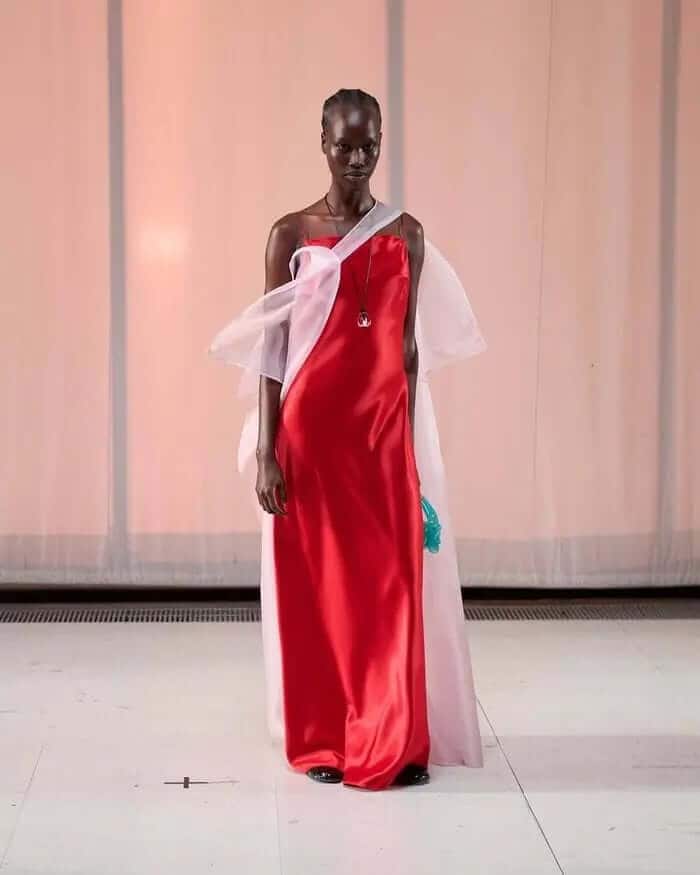
This season we've continued to see butter yellow, which has now become a wardrobe staple. We've also seen pistachio green and military green, with pistachio appearing in monochromatic outfits and military green in individual pieces like trench coats and cargo pants. An emerging trend is baby blue in flowing fabrics, tulle, and denim. And vibrant red is used primarily in accessories like bags and shoes to break up neutral tones such as brown, gray, and cream.
This year, lace and sheer fabrics have stood out above all other trends; they're no longer just for evening wear. They're seen in wide-leg trousers, sheer skirts over jeans, and blouses paired with biker or cowboy boots. The "fur" or shearling effect has also been a huge hit this season; Penny Lane-style coats and plush textures in bags and hats are must-haves. The ever-popular denim-on-denim look is back, but this time with very wide, distressed, and extra-long jeans. Men's tailoring is also prominent, with blazers featuring exaggerated shoulder pads and very wide-legged pleated trousers. And strategic layering is key, with layering being an art form in Copenhagen, featuring slip dresses over t-shirts, or even short skirts over long trousers.
Scandinavian Design Codes in Focus
At its core, Copenhagen Fashion Week is a celebration of Scandinavian design values. Designers showcased a refined balance between structure and softness. Clean lines were softened by fluid fabrics. Neutral tones were enriched by texture and layering.
There was also a strong sense of continuity. Collections didn’t feel disconnected from previous seasons. Instead, they built upon established brand identities, reinforcing the idea of fashion as an evolving conversation rather than constant reinvention.
The Role of Sustainability in the Shows
Unlike other fashion capitals where sustainability can feel like an afterthought, Copenhagen puts it front and center. Brands must meet environmental and ethical standards to participate, and that commitment showed in the collections. Many designers spoke through their clothes rather than slogans. Durable fabrics, timeless silhouettes, and multi-season wearability reflected a shift away from disposable fashion.
This approach didn’t limit creativity. On the contrary, it pushed designers to be more inventive, proving that constraints can inspire stronger design.
Modelia in CPFW
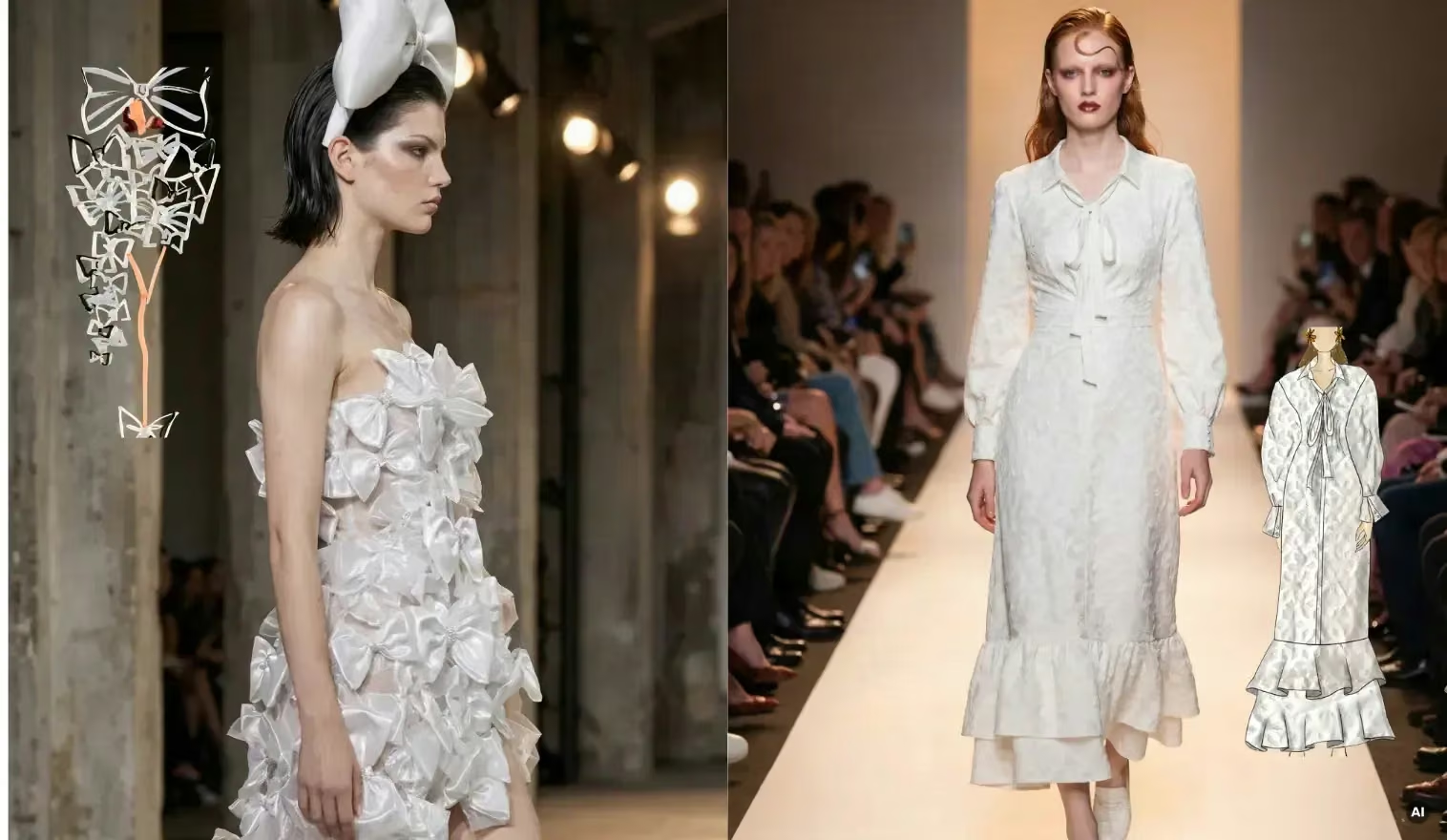
Modelia launched a social media campaign in collaboration with two emerging artists. As part of the project, the artists created the sketches for a fictional fashion collaboration that they would present at Fashion Week. Using Modelia, those initial concepts were brought to life as a full digital collection.
With the Sketch to Image tool, they were able to generate realistic visuals of models wearing the garments, walking down the runway or posing in an editorial style.
This project is not only a creative breakthrough, it also perfectly aligns with the sustainability values behind CPFW. The entire collection was created digitally, with zero waste and zero production costs, proving that innovation and responsible fashion can go hand in hand.
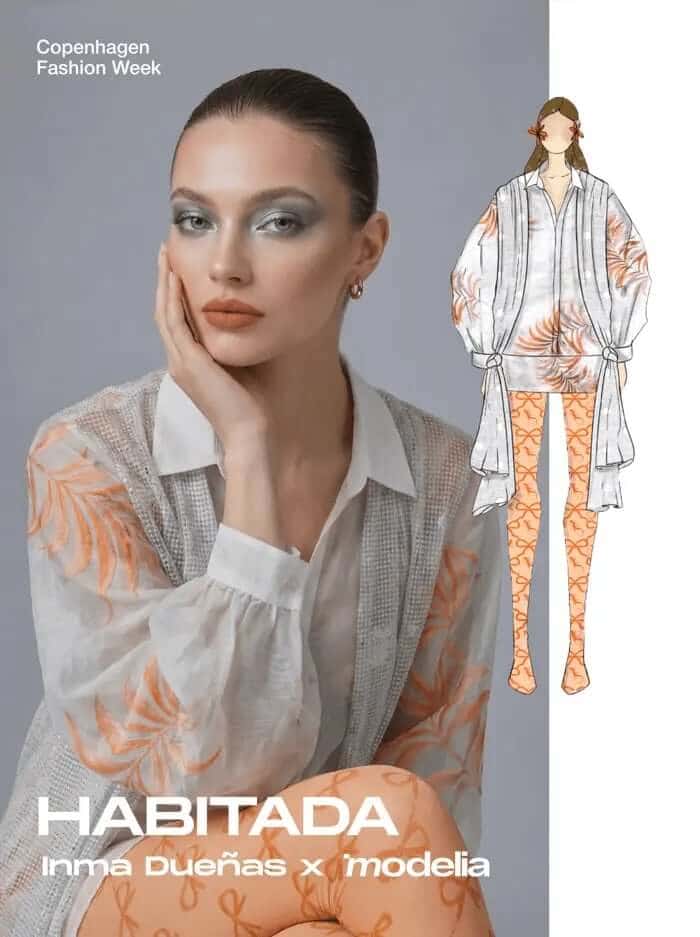
Inma Dueñas’ collection, titled Habitada, is inspired by domestic life and the intimacy of private homes. It explores the quiet beauty of everyday spaces and the emotional connection we build within them. The collection stands out for its soft pastel color palette and fluid silhouettes, featuring flowing dresses with ruffles and delicate details that evoke femininity, such as bows.
Miyuki Ohashi’s collection is also deeply feminine, defined by bold, voluminous silhouettes, oversized bows, and an abundance of hair accessories.
The looks combine layers of tulle with more structured elements, creating dramatic volumes and eye catching shapes that immediately draw attention.
Final Thoughts
Copenhagen Fashion Week continues to redefine what a modern fashion week can be. It proves that fashion can be creative without being excessive, stylish without being inaccessible and innovative without losing its soul.
The best shows and outfits from this season shared a common thread: They felt thoughtful and they felt connected to the lives of the people who will actually wear them. As the fashion industry continues to evolve, Copenhagen stands as a powerful reminder that the future of fashion isn’t about doing more. It’s about doing better.
Visit Modelia and keep learning about fashion and AI
FAQs: Copenhagen Fashion Week
What makes Copenhagen Fashion Week different from other fashion weeks?
Its strong focus on sustainability, wearability, and authentic design sets it apart from more traditional fashion capitals.
When does Copenhagen Fashion Week take place?
It typically happens twice a year, in January and August, aligning with the global fashion calendar.
Why is Copenhagen Fashion Week important for sustainability?
It’s one of the first fashion weeks to enforce sustainability requirements for participating brands.
What trends usually emerge from Copenhagen Fashion Week?
Relaxed tailoring, functional design, quiet luxury, and sustainable materials are recurring themes.
Is Copenhagen Fashion Week influential outside Scandinavia?
Yes. Many global brands and designers look to Copenhagen for early trend signals and new ways of thinking about fashion.

