


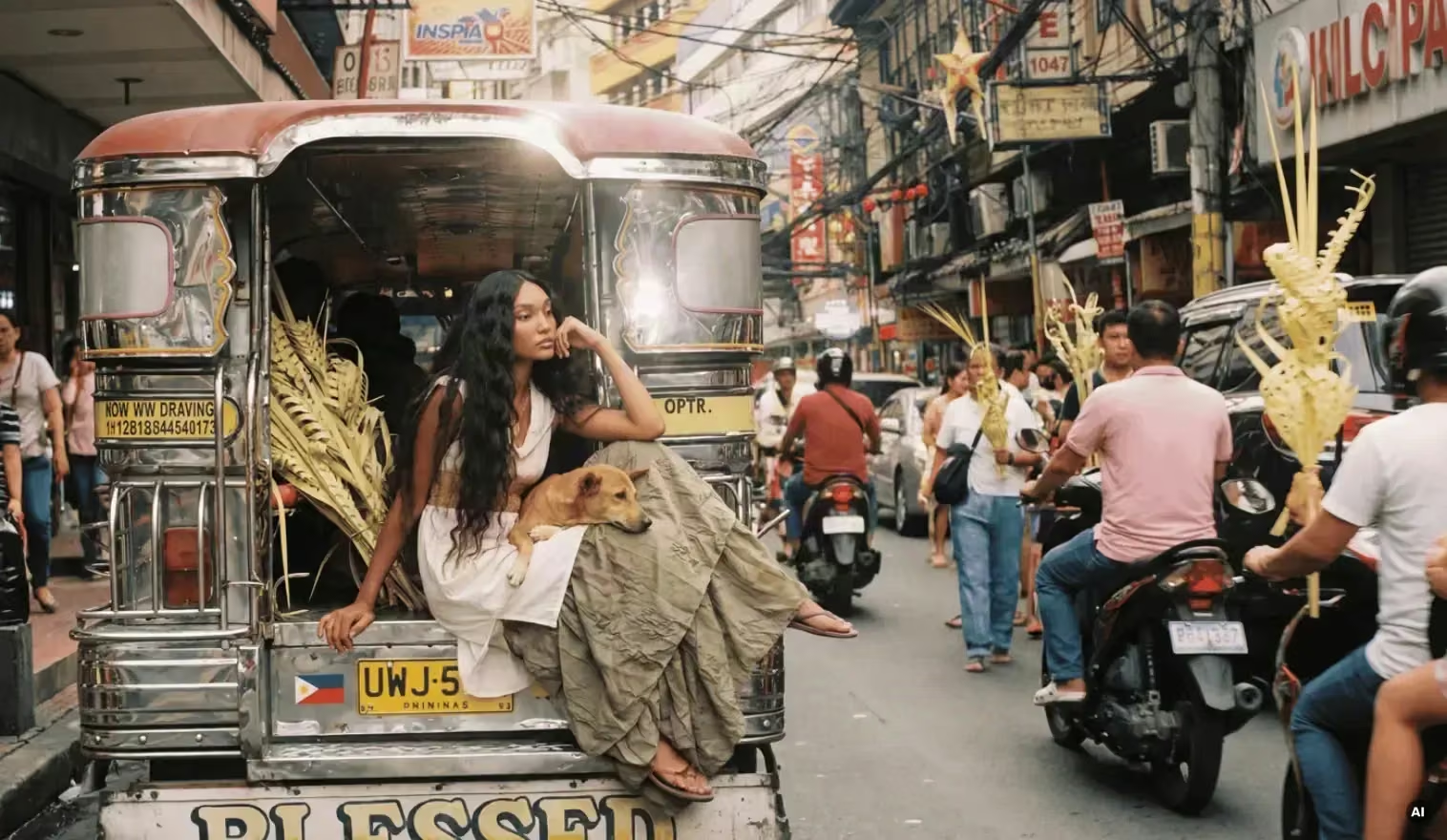
Holy Week is a global canvas where faith meets centuries of artistic heritage. Beyond the religious observance, it is a period where cities transform into living galleries of textile, color, and silhouette. From the solemn streets of Europe to the vibrant corners of Africa and Latin America, the "aesthetic of the sacred" tells a story of identity, craft, faith and human resilience.
At Modelia, we sit at the intersection of culture and design. We believe that to understand the future of fashion, we must first deconstruct the visual languages that have shaped our history. The global Holy Week aesthetics offer a profound masterclass in how humanity uses dress to express the most complex emotions: grief, hope, and rebirth. This is not merely "costume"; it is a sophisticated dialogue between fabric and faith that has survived for centuries. Join us as we explore five of the most visually striking traditions around the globe.
Spain: The Processions of the Holy Week
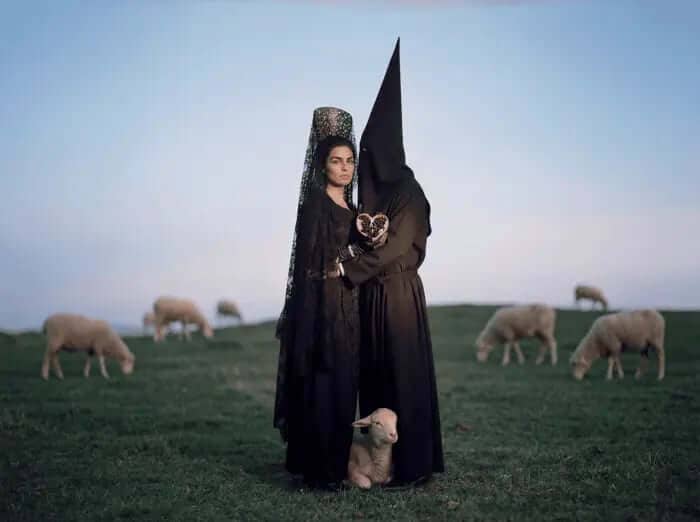
In cities like Seville, Málaga, León and Valladolid, Holy Week is an exercise in gravity and grandiosity. The Spanish aesthetic is perhaps the most iconic globally, defined by a silhouette that emphasizes height, mystery, and an almost brutalist verticality.
The Architecture of Penance
The defining element is the Capirote (a tall, pointed hood that dates back to the Spanish Inquisition but was adopted by the brotherhoods or cofradías, to represent the soul rising toward the heavens while hiding the identity of the penitent). From a design perspective, the Capirote creates a stark, geometric silhouette that transforms the human form into a living pillar.
This is the realm of maximalism. The Virgins are dressed in enormous velvet mantles, some stretching over 5 meters, adorned with gold embroidery. This technique uses real gold thread coiled around silk cores, creating a 3D relief that catches the flickering light of thousands of candles.
The Mantilla is a delicate silk lace veil worn over a high tortoiseshell comb (peineta), which adds a layer of ethereal transparency and intimacy to the heavy, opaque velvets. This play of textures, the weight of the gold against the lightness of the lace, creates a dramatic chiaroscuro effect that has inspired designers like Cristóbal Balenciaga or Alexander McQueen.
Guatemala: The Alfombras of Antigua
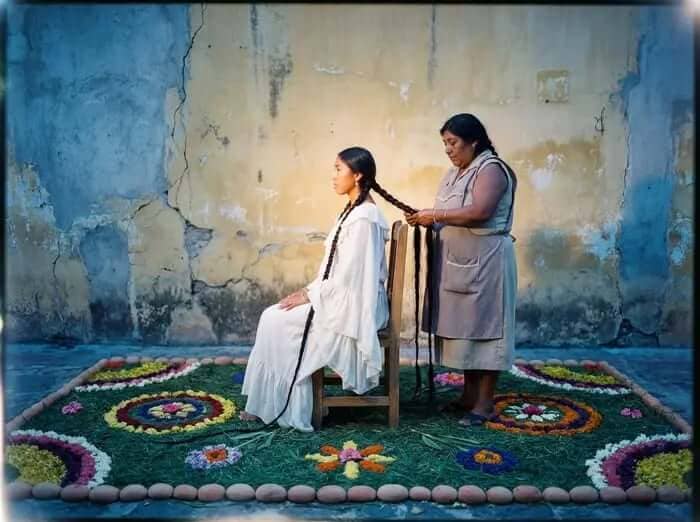
In the colonial city of Antigua, Guatemala, the ground itself becomes the most important textile of the season. The tradition of Alfombras (sawdust carpets) turns the processional route into a vibrant runway of organic art that exists for only a few hours before being swept away by the feet of the faithful.
Ephemeral Artistry
These carpets are made from dyed sawdust, sand, flower petals, and even fruits and vegetables. The level of precision rivals that of a printed textile, with intricate patterns reflecting both Catholic iconography and Mayan geometric traditions.
The palette is every imaginable hue (from electric neon pinks and teals to deep, earthy ochres).
While the ground is a riot of color, the human element, the Cucuruchos, provides a rhythmic balance. Dressed in saturated purple tunics with white waists, thousands of men carry massive wooden floats (andas). This is color theory in motion: the sea of purple (a heavy, spiritual color) moves over a floor of multicolored light, creating a harmonious visual. It reminds us that, in fashion, the background and context is just as important as the subject.
Ethiopia: The Orthodox Celebration of Fasika
High in the rock-hewn churches of Lalibela, the Orthodox celebration of Fasika (Easter) offers a vision of ethereal minimalism that stands in stark contrast to the dark, heavy velvets of the West. Here, the aesthetic is one of light, air, and community.
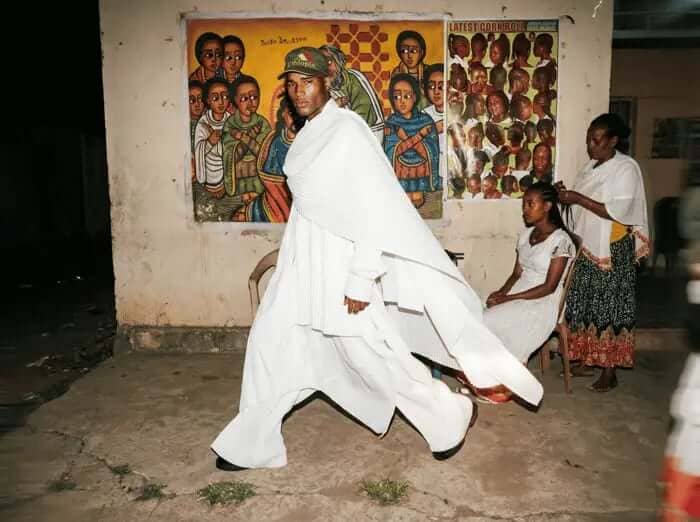
Technical Mastery in Cotton
In Ethiopia, the "Sacred Aesthetic" is defined by a single garment: the Netela. This is a handmade, scarf-like cloth made of gauzy cotton. It is worn in layers, creating a soft-focus effect that softens the silhouette of the thousands of worshippers gathered in the dark.
The streets are covered by people wearing a shimmering, translucent white with vibrant accents of primary colors in the Tibeb (the decorative border).
The Tibeb is where the personality of the weaver shines. These borders feature intricate, symbolic patterns woven directly into the fabric using silk or metallic threads. At night, as the faithful hold thin wax candles, the sea of white fabric glows from within. It is a testament to the power of monochromatic design; how a single color, when multiplied by thousands, can create a more powerful visual impact than any complex pattern.
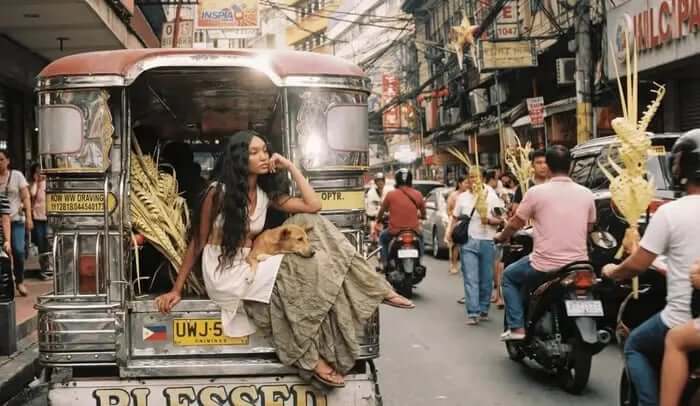
The Philippines: The Ritual of the Palaspas
The Filipino Holy Week is raw, tactile, and deeply rooted in organic materials. Here, the aesthetic is less about opulent metalwork and more about an honest connection to the land and the labor of the hands.
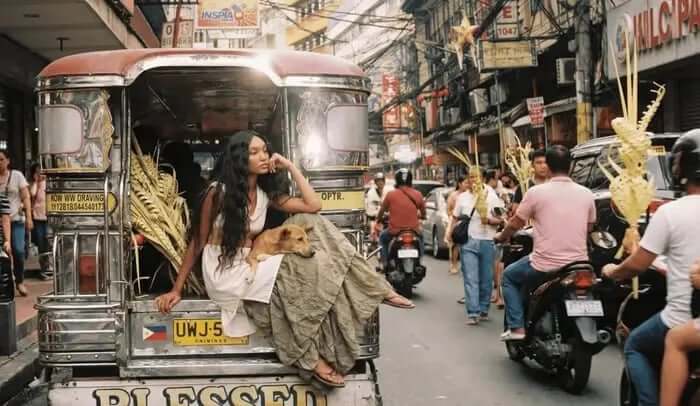
Geometric Nature
The star of the aesthetic is the Palaspas, elaborately woven palm fronds carried on Palm Sunday. These are not only branches, but sophisticated geometric sculptures. Weavers use ancient techniques to fold the leaves into shapes resembling stars, flowers, or birds, creating a temporary accessory that is entirely sustainable and biodegradable.
The participants often wear the Barong Tagalog or simple linen tunics. The beauty lies in the texture of the fiber, the rough touch of abaca or the smoothness of pineapple silk (piña). This celebration of natural materials is a direct precursor to the modern luxury movement toward honest luxury and artisanal sustainability.
Italy (Florence): The Scoppio del Carro
Florence celebrates Easter Sunday with the Scoppio del Carro (Explosion of the Cart). This is not just a ceremony; it is a time-machine that transports the city back to the 15th century.
A massive, ornate antique cart is pulled through the streets by white oxen to the Cathedral, where a mechanical "dove" rocket, lit from the high altar, flies down a wire to ignite a spectacular firework display within the cart. This ritual, designed to guarantee a good harvest, transforms the Piazza del Duomo into a stage of historical high fashion and pyrotechnic art.
The procession features over 150 participants dressed in authentic Renaissance attire. This is not costume in the theatrical sense; these are museum-quality recreations of the garments that defined one of the most influential eras in Western art.
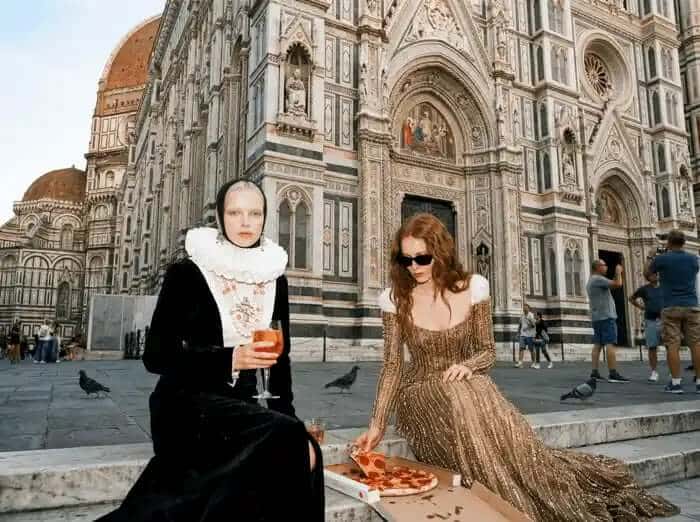
The Archive of Craft
Florence´s Holy Week is a celebration of historical maximalism. We see heavy silk brocades, hand-dyed wool hosiery, puffed sleeves with slashed-silk details, and velvet doublets. Every garment is a tribute to the legendary Arte della Seta (Silk Guild) of Florence. For a modern observer, it is a reminder that fashion has always been a tool for storytelling, using volume and pattern to project power and heritage.
Closing: A World of Inspiration for the Modern Eye
The diverse Holy Week aesthetics remind us that fashion and clothing have always been our most powerful tools for expressing communal values and historical memory. These traditions are not static, but living as archives and results of human creativity.
These global styles continue to inspire anyone with an eye for detail. At Modelia, we believe that the future of fashion, and the AI that helps us create it, must be built on a deep respect for these cultural roots. By understanding the "why" behind the silhouette, we can create technology that doesn't just generate images, but understands the soul behind every design.


