

Thanks to Modelia, the quality of our catalog has improved in both performance and look & feel, while also increasing our automation capabilities.

Consistent Character AI Generator
Bring creativity and consistency together with our AI character generator.
Modelia's Consistent Character tool lets you create a personalized AI model you can reuse across all your designs, campaigns, or virtual shoots. Keep your visual identity strong and recognizable, without the need for reshoots or extra costs.
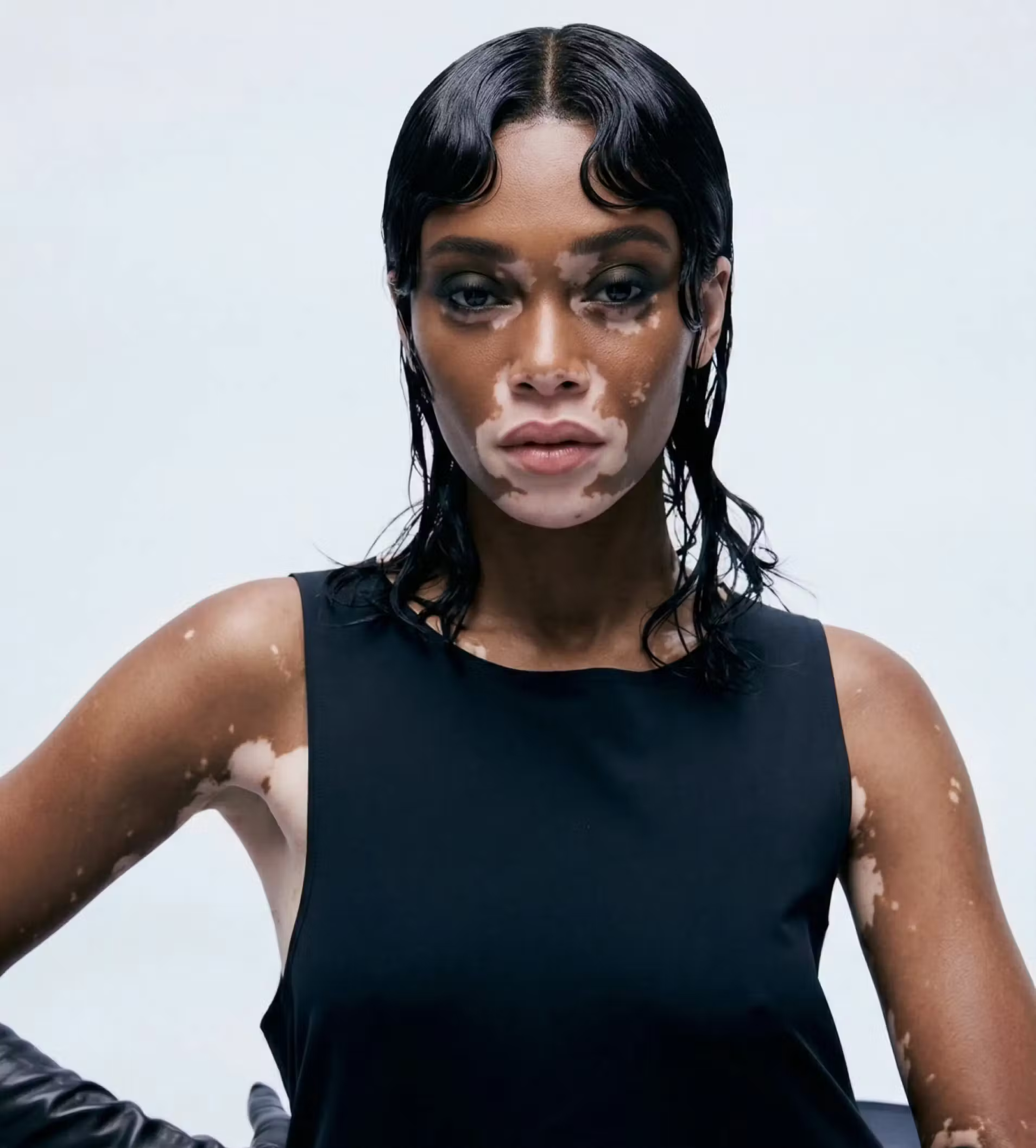


Design your own digital model once and reuse it across ecommerce, campaigns, and creative projects. Maintain a cohesive brand identity while scaling your content production effortlessly.


Build a consistent model that represents your brand identity.

Use the same model across multiple projects without redefining features.

Maintain the same look across ecommerce pages, campaigns, and ads.

Generate large volumes of content without redefining models each time.

Reduce production costs by generating new visuals without scheduling new shoots.

Generate your ideal AI model and use it in every generation.

Maintain a consistent visual language across campaigns, catalogs and platforms.

Test creative ideas instantly with endless styling and background variations.
Thanks to Modelia, the quality of our catalog has improved in both performance and look & feel, while also increasing our automation capabilities.
Modelia has helped us create content more quickly and showcase our products, allowing us to present them in a dynamic and varied way.

Modelia has helped us speed up our creative processes and improve our collections. By improving our service level, Modelia help us in strengthening our customer relationship.

I've started using Modelia and we've been pleasantly surprised by how well it works and the quality of the images. It's definitely a great choice for the times we're in. We still need to explore the app a bit more, but so far it looks very promising. Also, the technical support is excellent and they respond very quickly.

This app does it all! One is only limited by one's own creativity. Easy to use, with superb realistic results, and in this AI world you do actually get a real person to talk to and help when needed. I was able to create a whole new collection without the stress and expense of a complicated photo shoot and plan to use for much more.

Great content generation and excellent customer support. Compared to other AI tools, Modelia delivers high-quality results (around 90% are very good) at a reasonable cost. The support team is fast, helpful, and efficient, resolving issues quickly and even assisting with content generation when needed.

Highly recommended 100%. I was quite hesitant at first because I thought I wouldn't know how to use it, but I'm honestly very surprised and really happy with the results. It's amazing, to be honest. They explain all the options clearly, and if you have any questions, they respond quickly. I totally recommend it.

I will give it to you without the fluff. Modelia is the closest to a consistent character I have found; it is user-friendly, and the tools keep amazing me. I have not left the site for another yet.

This app does it all! One is only limited by one's own creativity - Easy to use; with superb realistic results, and in this AI world you do actually get a real person to talk to and help when needed. I was able to create a whole new collection without the stress and expense of a complicated photo shoot, and plan to use for much more.
Simon Southwood
Modelia has been a game changer for our online store. The tools are intuitive, fast, and produce high-quality, realistic mockups, much better than other platforms we've tried. We also really appreciate the flexible pricing and outstanding customer service: fast, helpful, and personal. We're excited to keep using it and explore its full potential.
Chris Delaney
Great content generation and excellent customer support. Compared to other AI tools, Modelia delivers high-quality results (around 90% are very good) at a reasonable cost. The support team is fast, helpful, and efficient, resolving issues quickly and even assisting with content generation when needed.
Jenna Scoble
Highly recommended 100%. I was quite hesitant at first because I thought I wouldn't know how to use it, but I'm honestly very surprised and really happy with the results. It's amazing, to be honest. They explain all the options clearly, and if you have any questions, they respond quickly. I totally recommend it.
Cristina Infantes Ruito
New to AI, I found Modelia intuitive and easy to use, especially for applying products to models. The tutorials for the video features are useful, and the fast, helpful customer support gave me confidence in using the platform.
Lee
From a Flat lay to an impressive Model... From a Flat lay to an impressive model wearing my garment.... I love it!!!!
Freddie
Modelia has been incredibly easy to use and helped me get started quickly without frustration. What really stands out is the customer service: I got a fast, thoughtful response from the CEO even on a Sunday, which was amazing. The support is truly exceptional, and it's now a key part of my creative workflow. I highly recommend it.
Laurie Day
I'm very satisfied with Modelia, the output quality is high, it's easy to use, and overall very reliable. I especially value the level of control through prompts, and I've found that shorter clips work better for motion. I'm also using the API, and even though it's not cheap, I think it's definitely worth the investment.
Utahna Hunter

The service they offer is excellent and very easy to understand. In my case, it helps me save time and costs by using the platform. I’ve also had the chance to meet and chat with Ivan, CEO and founder of Modelia, who was very kind and attentive. I 100% recommend it.
Andres Yoon
Modelia is very user-friendly and easy to get started with. The standout is the exceptional customer service, with quick responses even from the CEO on a Sunday. It has become a core part of my creative workflow, and I highly recommend it for both its usability and support.
Laurie Day


AI MODEL GENERATOR
FASHION-FIRST DESIGN & SUPPORT
Have a question?
Have questions or ready to start transforming your fashion business with AI? We’re here to help! Reach out and let’s create something amazing together.
Contact Us